
Lately, I have been thinking more and more often that the path of professional formation and development is never walked alone. Although every professional ultimately chooses their own direction, reads, studies, challenges ideas, and finds answers to their own questions, there are always people along the way who contribute not only to the development of our knowledge, but also to the formation of our scientific way of thinking.
Looking back, I can say that several teachers and colleagues have had a particularly significant influence on the development of my professional worldview.
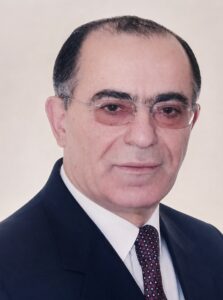 Thanks to the demanding Professor Sergey Arzumanyan, I began to take a deep interest in scientific psychology, particularly in the evolution of the nervous system and the psyche, Leontiev’s Activity Theory, and Dmitry Uznadze’s Theory of Set (I still remember the list of several dozen must-read monographs that I compiled on his advice and carried in my wallet for several years). His lectures and scientific approach taught me to think of psychology as a science (perhaps it was also from him that I inherited my intolerance toward any pseudoscientific system lacking empirical evidence), and to consider mental processes from the perspective of their physiological foundations as well.
All of this eventually led me to Gordon Allport’s and Hans Eysenck’s trait theories of personality, George Kelly’s theory of personal constructs, and – Your Majesty – psychophysiology, and later to cognitive science and cognitive-behavioral psychotherapy. Professor Arzumanyan was perhaps one of the most charismatic lecturers I encountered during my years at the Pedagogical University.
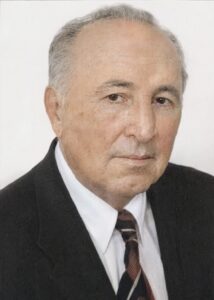 Under the influence of Professor Konstantin Danielyan, I began to pay greater attention to mental health problems from biological and psychiatric perspectives (I will never forget our discussions about the biological and social determinants of psychotic disorders in his office at the Institute for Advanced Medical Training). My interest, which began with Kraepelin and Jaspers, later developed into a long-standing fascination with neurobiology, mental processes, and the neurobiological foundations of psychotherapy.
I will always vividly remember Professor Danielyan’s lectures – he was also a great connoisseur of classical literature – enriched with examples from the characters of Dostoevsky and Turgenev, as well as his magnificent leather briefcase and impeccably neat brogued Oxfords.
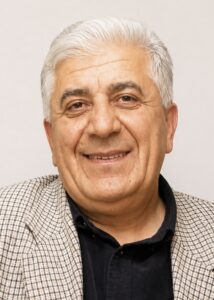 One of the important stages of my professional development is also associated with Ruben Poghosyan, one of the pioneers of psychotherapy in Armenia. In 2008, he was the person who hired me at the “Ayg” Psychological Center, where I worked until 2010. He became my first supervisor and my first clinical supervisor.
Although his methodological orientation was psychoanalysis, this actually helped me position myself in the opposing scientific camp – the one inhabited by B. F. Skinner, the father of operant conditioning; Albert Bandura, one of the leading figures of social behaviorism; and Albert Ellis and Aaron Beck, founders of cognitive therapy. Even though my professional path eventually led me in a different psychotherapeutic direction, his experience, professional attitude, and therapeutic thinking played an important role in my development as a psychotherapist.
I always remember with particular warmth his calm manner of speaking and moving, and his tactful way of reprimanding me when he occasionally noticed my eyes closing during his classes. As a student, I worked in all sorts of places – from being a waiter to managing a supermarket – but at that particular stage I was working night shifts at an internet café, and after a sleepless night I would go straight to class in the morning.
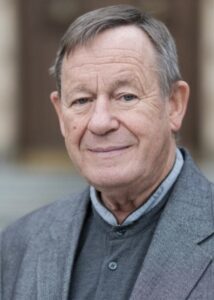 Later, during my studies in Poland at Adam Mickiewicz University in Poznań, my academic supervisor, Professor Stanisław Puppel, had a profound influence on me. His academic guidance helped me delve more deeply into psycholinguistics, cognitive linguistics, semantics, and semiotics. I became acquainted with pragmatic theories of the evolution of speech, communication, and the psyche; discovered the works of Antoni Kępiński, one of the finest representatives of humanistic psychiatry; explored the works of Aaron Antonovsky, Alfred Korzybski, and Noam Chomsky – some of whom I had already encountered during my university years – and had the privilege of personally meeting Jan Strelau, one of the legends of world psychology.
These studies revealed to me, in a new light, the role of language, meaning, and cognitive processes in psychotherapy, helping me understand more comprehensively how cognitive and behavioral sciences can be connected.
There is a verb in English: to champion. If that verb were a person, it would undoubtedly be Professor Puppel.
Over time, all these influences became the foundation upon which I continued my own independent exploration of neurobiology, mental processes, and the neurobiological foundations of psychotherapy. That journey continues to this day, and I am certain that many new questions and discoveries still lie ahead.
At the same time, my many colleagues and friends have played – and continue to play – an enormous role in my professional development. Our discussions, collaborations, and sometimes even disagreements have always been important sources of growth and rethinking.
And, of course, I feel a special gratitude toward all my clients. They are the ones who, for years, often without even realizing it, have continued to teach me and encourage me to keep educating myself. Every case, every difficulty, every small victory is a new opportunity to understand the human being more deeply, reconsider my own assumptions, and continue learning.
If someone asked me today who my teachers have been, I could hardly limit my answer to my university professors and academic supervisors. My teachers have also been familiar and unfamiliar scientists and clinicians, past and present – with special thanks to Oliver Sacks, Irvin Yalom, and Robert Sapolsky – who taught me how to think; those who trusted me; those who guided me; and those whose work continues to help me, as a professional and perhaps also as a person, to become a little more than I was yesterday and the day before.
I am also grateful to those who, intentionally or unintentionally, stood in my way, thereby creating challenging situations that helped me stay in good shape.
Thank you, each and every one of you.