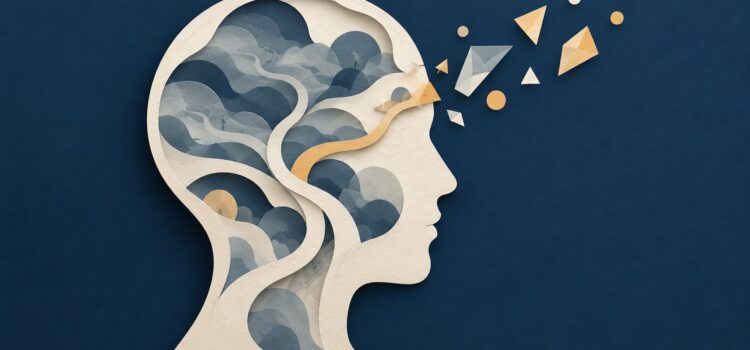
The Invisible Obstacles to Exposure: Attention, Covert Safety Behaviors, and Reassurance Seeking

The Invisible Obstacles to Exposure: Attention, Covert Safety Behaviors, and Reassurance Seeking

The Brain as a Bayesian Machine: From Computational Cognitive Neuroscience to Psychotherapy Read Article 2. Exposure as Bayesian Learning: How New Experience Changes the Brain’s Predictions of Danger 3. The Invisible Obstacles to Exposure: Attention, Covert Safety Behaviors, and Reassurance

Exposure as Bayesian Learning: How New Experience Changes the Brain’s Predictions of Danger

Exposure as Bayesian Learning: How New Experience Changes the Brain’s Predictions of Danger

The Brain as a Bayesian Machine: From Computational Cognitive Neuroscience to Psychotherapy Read Article 1: The Brain as a “Bayesian Machine”: Uncertainty, Prediction, and the Illusion of Control 2. Exposure as Bayesian Learning: How New Experience Changes the Brain’s Predictions

The Brain as a “Bayesian Machine”: Uncertainty, Prediction, and the Illusion of Control

The Brain as a “Bayesian Machine”: Uncertainty, Prediction, and the Illusion of Control

The Brain as a Bayesian Machine: From Computational Cognitive Neuroscience to Psychotherapy 1. The Brain as a “Bayesian Machine”: Uncertainty, Prediction, and the Illusion of Control 1.1. The Bayesian approach at the intersection of cognitive neuroscience, clinical psychology, and cognitive